Reliability. Scalability. Rapid access to what matters.
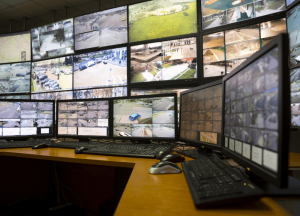
A defense control room is a secure operational environment where teams monitor, analyze and act on live information from many sources at once, usually across a video wall and operator workstations. Designing defense control rooms for high-pressure operations comes down to three requirements: systems that stay available under failure, architectures that grow without redesign, and workflows that put the right information in front of the right operator in seconds. The display and signal infrastructure sits at the center of all three. When it performs, operators spend their attention on decisions instead of on the technology.
At a glance
- Defense control rooms treat availability as a design requirement, with redundancy applied to controllers, signal paths, power and network links.
- Scalable architectures add sources, displays and operator positions without replacing the core system.
- Rapid access depends on saved layouts, role-based source routing and low-latency signal paths.
- IP KVM (keyboard, video and mouse over IP) gives authorized operators access to remote systems from any approved workstation.
- Centralized management through Aetria gives supervisors one place to control layouts, sources and permissions.
Planning a mission-critical control room?
Talk to a specialist about video wall controllers, redundancy and scalable signal distribution.
What makes a defense control room different from a standard control room?
Defense control rooms operate under conditions most commercial control rooms never face. Operators monitor sensor feeds, maps, communications and system status at the same time, and their decisions often carry operational consequences. Security accreditation, network separation and strict access control shape every technology choice.
The display layer has to handle all of this and stay simple enough to use under stress. That requirement drives the three design tests covered below.
How do you design defense control rooms for reliability?
Reliability is the first design test. A display system that fails mid-operation removes the shared picture for everyone in the room. Design for availability by identifying every single point of failure and removing it.
Redundancy at every layer
Apply redundancy to video wall controllers, power supplies, signal paths and network links. Dedicated video wall controllers built for continuous operation are easier to validate and support than general-purpose systems repurposed for display duty. The VSN Series offers configurable video wall controllers that fit this approach.
Defined recovery behavior
Decide what happens on failure before commissioning. Layouts should restore automatically after a power event, and failover should not need operator action. Test these behaviors during acceptance and again on a fixed schedule.
Want the full design checklist?
Free guide: key considerations for mission-critical control rooms.
How should a defense control room scale over time?
Missions change, and control rooms change with them. A room specified for today’s source count rarely stays that size. Choose architectures where capacity grows by adding modules instead of replacing the core.
Modular controllers such as the VSN Series match the number of inputs and outputs to the requirement. IP-based distribution with ActiveSQX adds sources and endpoints through the network instead of new cabling runs. Plan spare capacity in space, power, cooling and network bandwidth at the design stage, because these limits are expensive to change later.
How do operators get rapid access to mission-critical information?
Speed to information is the third design test. Operators should reach the source they need in a few actions, not after navigating menus. Build saved layouts for common scenarios such as routine monitoring, incident response and shift handover.
Role-based permissions then show each operator the sources and controls relevant to their position. Keep latency low across capture, processing and display so the picture matches what is happening. Aetria centralizes layout recall, source routing and permissions, so a supervisor can reconfigure the whole room from one platform.
How does IP-based signal distribution support secure operations?
AVoIP (audio and video over IP) distributes sources across standard network infrastructure, which lets teams share information between rooms, sites and workstations. IP KVM adds control of remote systems, so an operator can work on a source machine that sits in a secure equipment room. Aligo provides 4K IP KVM and Arqa provides HD IP KVM.
Network design matters as much as the endpoints. Segment traffic, size bandwidth for peak load and align the architecture with your accreditation requirements.
What should you evaluate before specifying display and control infrastructure?
Start with the mission and work back to the technology. Document source types and counts, required latency, availability targets, security constraints and expected growth over five to ten years. Then assess vendors against those requirements, including support model and long-term product availability.
Use ISO 11064, the standards series on ergonomic design of control centers, as a reference for layout, sightlines and workstation design. Defense control rooms succeed when reliability, scalability and rapid access are designed together instead of added one at a time.
Frequently asked questions
What is a defense control room?
A defense control room is a secure facility where operators monitor and act on live data from sensors, communications and command systems. It typically combines a shared video wall with individual operator workstations. The design prioritizes availability, access control and speed of information delivery.
What are the key design requirements for a defense control room?
The core requirements are reliability, scalability and rapid access to information. Reliability means removing single points of failure. Scalability means adding sources and displays without replacing core systems, and rapid access means saved layouts, role-based routing and low latency.
How much redundancy does a mission-critical control room need?
The answer depends on the mission and the accrediting authority. N+1 is a common starting point for critical components such as controllers and power supplies. Define recovery time targets with stakeholders, then design and test failover against them.
How do you make a control room scalable?
Use modular controllers and IP-based distribution so capacity grows by adding units and endpoints. Reserve space, power, cooling and network bandwidth for future expansion. Avoid designs where a new source or display forces a rebuild of the core.
Why use IP KVM in a defense control room?
IP KVM lets operators control remote computers from any authorized workstation over the network. Source machines can stay in a secure equipment room while operators work from the control room. Aligo supports 4K and Arqa supports HD.
How do operators access information faster on a video wall?
Saved layouts for defined scenarios let operators recall the right view in one action. Role-based permissions limit each position to relevant sources and controls. Low-latency capture and processing keep the displayed picture current.
Does ISO 11064 apply to defense control rooms?
ISO 11064 is a series of standards on the ergonomic design of control centers, covering layout, workstations and displays. Applicability depends on program requirements, but many teams use it as a design reference. Confirm obligations with your accrediting authority.
Build defense control rooms that hold up under pressure
Our team can help you specify reliable, scalable display and control infrastructure for mission-critical operations.