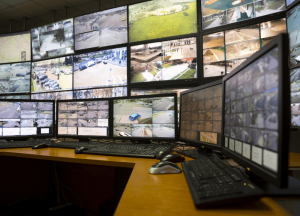
When seconds matter, the interface shouldn't get in the way
A unified control room ecosystem is an integrated set of hardware and software that lets operators manage every video source, layout, and alarm from a single interface, rather than switching between separate keyboards, video matrices, and software clients. During an incident, this consolidation removes the manual steps that slow human response: logging into separate systems, locating the right keyboard, or hunting for a password. The result is that critical footage or data can be put on the video wall in one or two clicks instead of a sequence of disconnected actions. For control rooms managing security, transportation, utilities, or emergency response, that difference is measured in seconds that matter.
At a glance
- Unified control room platforms consolidate video wall control, source routing, and KVM access into a single operator interface.
- Manual system-switching during an incident has been shown to add measurable delay to operator response, even when each individual system works correctly.
- Aetria centralizes layout management, source routing, and operator permissions across single and multi-site control rooms.
- Single sign-on and role-based permissions remove password lookups as a point of failure during high-stress events.
- IP KVM systems such as Datapath Aligo and Arqa let operators access any connected machine from any seat without swapping hardware.
Why does response time break down during an incident?
Most control room failures are not technology failures. They are workflow failures that surface under pressure. An operator who can locate a camera feed in five seconds during a quiet shift may take a minute or more to do the same task during a live incident, when alarms are firing, radios are active, and several systems demand attention at once.
The cause is usually architectural. Many control rooms grow over time, with a video wall controller from one vendor, a KVM switch from another, and a separate software client for each camera system, building management platform, or access control tool. Each addition solves a problem in isolation but adds a step to the operator’s workflow. Under stress, every additional step is a place where the response can stall, including:
- Identifying which physical keyboard or workstation controls the relevant system
- Logging into a separate software client with separate credentials
- Locating the correct camera, feed, or data source within that client
- Manually pushing or resizing that source onto the correct section of the video wall
- Repeating part or all of this process for a second or third source
None of these steps is individually difficult. Stacked together during a live event, they add real delay, and they are the exact conditions under which human error is most likely.
See it in a real deployment
How control rooms are consolidating disparate AV systems into a single operator workflow.
What does a unified control room ecosystem actually remove from the operator's workflow?
Single sign-on and centralized permissions
In a unified platform such as Aetria, an operator authenticates once at the start of a shift. From that point, every source they are permitted to access is available without a second login. This matters more than it sounds: in a legacy environment, a forgotten or expired password on a secondary system is enough to delay an operator at the exact moment speed is critical. Centralized, role-based permissions remove that failure point entirely while still maintaining an audit trail of who accessed what, and when.
One interface, not three
Rather than switching between a video wall controller’s native software, a separate KVM client, and a third-party camera management system, the operator works from one interface. Source routing, layout selection, and machine access are unified into the same screen and the same set of controls. Putting a live feed on the wall becomes a drag, a click, or a preset call, not a sequence of application switches.
Hardware that matches the workflow
The software layer only solves half the problem if the hardware still requires an operator to physically move between keyboards. IP KVM systems such as Aligo and Arqa allow any operator, at any seat, to access any connected source machine over the network, without swapping a physical keyboard, video, mouse (KVM) switch or relocating to a specific desk. Combined with a video wall controller like the Datapath VSN Series, which manages multi-head display outputs and pixel mapping across the wall, the physical and digital layers of the control room move in step with each other.
Want a technical walkthrough?
Talk to a specialist about consolidating your control room's KVM, video wall, and source routing into one workflow.
What does "one or two clicks" actually look like during a live incident?
Consider a security control room handling an access control alarm. In a legacy setup, the operator must identify which camera covers the affected door, find the right software client, log in if the session has timed out, locate the live feed, and manually push it to an open section of the video wall, while the alarm is still active and other duties continue.
In a unified ecosystem, that same event triggers a pre-configured response. The alarm itself, or a single preset selected by the operator, can pull the relevant camera feed directly onto a defined section of the video wall, using saved layouts and source mappings rather than rebuilding the action from scratch each time. The operator’s task shifts from locating and routing information to interpreting it and deciding what to do next, which is the part of the job that actually requires a human.
This is the practical effect of unification: it does not remove the operator from the decision, it removes the operator from the data entry.
Frequently asked questions
What is a unified control room ecosystem?
How does control room integration reduce incident response time?
What is the difference between a video wall controller and a full control room platform?
A video wall controller, such as the Datapath VSN Series, manages how signals are processed and displayed across the wall. A full control room platform, such as Aetria, sits above that layer to manage operator permissions, layouts, and source routing across one or more rooms.
Can operators access any machine from any seat in a unified setup?
Yes. IP KVM systems such as Datapath Aligo and Datapath Arqa allow operators to access any connected source machine from any workstation over the network, without needing to be physically positioned at a specific desk.
Does unifying control room systems reduce security risk?
Is a unified control room platform only suitable for large facilities?
No. The underlying architecture, including the Datapath VSN Series and Aetria, is designed to scale from single-room deployments to large, multi-site operations, so smaller control rooms can adopt the same workflow principles.
What types of facilities use unified control room ecosystems?
Security operations centers, transportation hubs, utilities, broadcast facilities, and emergency response centers all use unified control room ecosystems where fast, accurate access to live video and data is operationally critical.
How long does it take to consolidate an existing control room into a unified platform?
Ready to remove the delay from your control room?
See how Aetria and Datapath's video wall and KVM hardware work together as a single operator workflow.