Turning scattered data into shared situational awareness
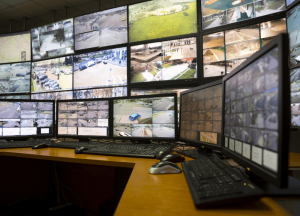
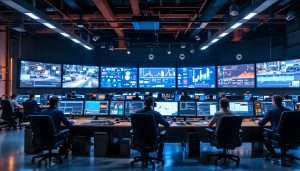
A video wall improves operational decision making by consolidating feeds from multiple systems, cameras, and data sources onto one shared display, giving every operator in a room the same real-time picture at the same moment. Instead of switching between individual monitors or waiting for a colleague to relay information, teams see priorities, alerts, and trends as they happen. This shared visibility shortens the time between detecting an issue and acting on it, which is what separates a video wall used purely for CCTV (closed-circuit television) monitoring from one built as a genuine decision support tool. Modern video wall systems now combine security feeds with network dashboards, business intelligence, and live data streams, extending their role well beyond surveillance.
At a glance
- A video wall controller distributes and scales content from multiple sources across a single display or array of displays from one management interface.
- Combining CCTV, network monitoring, and business data on one wall reduces the time operators spend switching between separate systems.
- Software platforms such as Aetria let operators reconfigure layouts and reassign sources without touching hardware.
- AVoIP (audio-visual over IP) and KVM (keyboard, video, mouse) distribution let operators pull any source to any display over standard network infrastructure.
- Role-based permissions ensure the right operator has control over the right sources during high-pressure incidents.
Want to see Aetria in action?
Find out how Aetria brings every source, layout, and operator into one control room platform.
What is a video wall's role in operational decision making?
A video wall functions as a shared operational picture. Rather than each operator interpreting their own monitor independently, everyone in the room works from the same layout, the same priorities, and the same live data. This matters most in environments where speed and accuracy both count: network operations centers, emergency services, transportation control rooms, and broadcast facilities.
The shift happened as video wall controllers moved from fixed, hardware-defined layouts to software-managed canvases. A controller like the Datapath VSN Series scales and positions signals from multiple sources across any combination of displays, while software such as Aetria lets operators change what appears where in seconds rather than requiring a technician to rewire connections.
How do video walls help operators prioritize critical information?
Prioritization on a video wall comes down to layout control and source flexibility. Operators need to push a critical feed to the largest or most central position on the wall the moment it becomes relevant, without disrupting everything else on display.
This is handled through pixel mapping, the process of defining exactly how each source maps onto the physical canvas of displays. A well-configured system lets an operator resize, reposition, or promote any window instantly, whether that is a live camera feed, a network health dashboard, or an incoming alert from a monitoring system. Bezel compensation, which adjusts content so it displays correctly across the physical gaps between screens, ensures nothing critical is lost or obscured at the seams.
Aetria adds a layer of operator permissions on top of this, so only authorized staff can override a layout or promote a source during an active incident, preventing accidental changes at the worst possible moment.
What data sources can operators bring onto a video wall?
Modern video wall systems are not limited to camera feeds. A single wall can display:
- Live CCTV and IP camera streams
- Network and infrastructure monitoring dashboards
- Business intelligence and KPI (key performance indicator) displays
- Mapping and GIS (geographic information system) software
- Communication and radio system status
- Weather, transport, or external data feeds relevant to operations
Bringing these sources together depends on the input flexibility of the underlying hardware. Capture solutions such as Datapath VisionSC and VisionAV bring in signals from cameras and external systems, while multi-output graphics cards like Image handle rendering across the wall itself. For IP-based signal distribution, AVoIP platforms such as Datpath Aligo and Datapath Arqa let operators route any source to any display over standard network infrastructure, without dedicated point-to-point cabling for every connection.
Consolidating multiple data sources onto one wall?
Our whitepaper covers signal distribution, source aggregation, and layout planning for decision-critical environments.
How do video walls support collaboration during major incidents?
During a major incident, a video wall becomes the shared reference point for every operator, supervisor, and responder in the room. Because everyone sees the same layout at the same time, verbal handoffs and status updates take less time to communicate, and fewer details get lost between shifts or teams.
Multi-site organizations extend this further. A platform like Aetria allows a central control room to monitor and manage video walls across multiple physical locations from one interface, so a regional operations team can see the same real-time picture as staff on-site. This is particularly relevant for organizations managing distributed infrastructure, retail estates, or transport networks, where an incident in one location needs immediate visibility at a central command point.
What should teams look for in a decision-critical video wall system?
Not every video wall is built for high-stakes decision making. Teams evaluating a system for a control room, as opposed to a lobby display or digital signage wall, should look for:
- Hardware-based processing to minimize latency between source and display
- EDID (Extended Display Identification Data) management to ensure sources and displays negotiate resolution and timing correctly
- Redundancy at the controller level to prevent a single point of failure
- Software-defined layout management that does not require re-cabling to reconfigure
- Role-based operator permissions to control who can change what during an incident
- Support for AVoIP and KVM distribution alongside traditional multi-head display outputs
Frequently asked questions
What is a video wall controller?
A video wall controller is hardware or software that distributes, scales, and positions video signals from multiple sources across one or more connected displays, managed from a single interface.
How does a video wall improve situational awareness?
Can a video wall display data from multiple systems at once?
What is the difference between a video wall controller and a graphics card?
A graphics card such as Image outputs signals to multiple displays, while a video wall controller like the Datapath VSN Series manages how those signals are scaled, positioned, and reconfigured across the wall in real time.
How does AVoIP fit into video wall systems?
AVoIP (audio-visual over IP) distributes video signals over standard network infrastructure instead of dedicated point-to-point cabling, allowing any source to be routed to any display through platforms such as Datapath Aligo and Datapath Arqa products.
Do video walls support NDI and SDVoE sources?
How do operators manage video walls across multiple control rooms?
Centralized platforms such as Aetria let operators manage layouts, source routing, and permissions across multiple sites from a single interface, rather than managing each control room separately.
What industries use video walls for decision making?
Network operations centers, emergency services, transportation authorities, broadcast facilities, and enterprise security teams all use video walls to support faster, shared decision making.
Ready to bring your operational data into one view?
Talk to our team about designing a video wall system built for decision-critical environments.