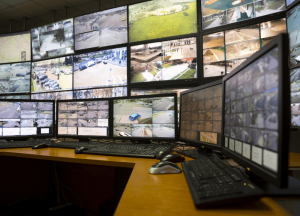
Secure IP-KVMs for critical infrastructure workstations
A secure IP-KVM is a keyboard, video, and mouse (KVM) extension system that separates the operator’s desk from the physical server hardware it controls, transmitting control signals over a dedicated or isolated IP network instead of direct cabling. For critical infrastructure operators, this means SCADA (supervisory control and data acquisition) servers can be removed entirely from the control room floor and locked inside a secure server rack, while operators retain full real-time control from a desk that carries no local processing, no local storage, and no direct network path to the OT (operational technology) environment. Products like Datapath’s Aligo and Arqa put that separation into practice, closing off two of the most common physical attack vectors at the point where they are hardest to monitor: the desk itself.
At a glance
- A secure IP-KVM separates the operator workstation from the server hardware, connecting the two only through a controlled IP link.
- SCADA and OT servers can be relocated to a locked, access-controlled server rack with no loss of operator control.
- The operator desk becomes a KVM endpoint only, with no local USB storage, no local drive, and no direct connection to the OT network.
- Aligo and Arqa are Datapath’s IP-KVM platforms, purpose built for isolating sensitive compute from user-facing environments.
- This model removes USB-borne malware introduction and local network tampering as viable attack paths at the desk.
Want to see Aligo in action?
Learn how Aligo and Arqa isolate operator desks from SCADA infrastructure.
Why does workstation physical security matter for SCADA and OT systems?
Control room desks have historically been treated as the safe, human side of an OT deployment, while the servers behind them get the hardened treatment: locked racks, access logs, and restricted physical entry. That split ignores where most physical compromise actually happens. A workstation sitting on an open desk, with USB ports and a live network connection, is reachable by anyone who can get near the desk, whether that’s a contractor, a visitor, or an insider with legitimate but excessive access.
For utility operators, water treatment facilities, energy distribution sites, and other critical infrastructure environments, that desk-level exposure is a direct path into the SCADA layer. Malware introduced through a USB device, or a network tap connected at the workstation, does not need to breach the server rack at all. It only needs to reach the machine the operator is already sitting in front of.
How do Aligo and Arqa remove USB and local network risk from the operator desk?
Aligo and Arqa are Datapath’s IP-based KVM platforms, built to extend keyboard, video, and mouse control over standard IP networks rather than direct, local connections. In a secure deployment, the physical SCADA server is installed in a locked, access-controlled rack, often in a separate room or a dedicated equipment area. The operator’s desk holds only a KVM endpoint: a small unit that receives video and sends keyboard and mouse input over the network, with no local compute, no local storage, and no exposed connection to the OT network itself.
What this removes from the desk
Local USB storage risk
- With no server-class machine at the desk, there is no local USB port through which removable media can introduce malware or exfiltrate data directly into the SCADA environment.
Direct network exposure
- The operator's desk connects to the KVM distribution network, not to the OT network the SCADA server sits on, so a compromised or tampered desk endpoint does not hand an attacker a live path into production control systems.
Unmonitored physical access
- Because the server itself is relocated to a controlled rack, access to the machine that actually runs SCADA software can be logged, badge-restricted, and monitored independently of who is sitting at the operator desk.
Datapath’s Aligo products are built for 4K environments requiring intelligent AVoIP (audio-visual over IP) KVM extension, while Datapath’s Arqa products serves HD-resolution deployments with the same underlying isolation model. Both allow an operator to work exactly as they would at a local machine: full keyboard and mouse response, live video, and no perceptible change in workflow, while the server itself never leaves the secure rack.
Planning a control room upgrade?
Talk to a specialist about isolating SCADA and OT infrastructure with IP-KVM.
Where should SCADA servers be located in a secure IP-KVM deployment?
The core principle is straightforward: the server goes wherever physical access can be most tightly controlled, and the operator stays wherever the work needs to happen. In practice, that usually means a dedicated server room, a hardened equipment cabinet, or an off-site secure facility connected back to the control room over managed IP infrastructure. Because Datapath Aligo and Arqa extend KVM sessions over standard networking rather than proprietary point-to-point cabling, the server rack does not need to be in the same building as the operator desk, only reachable over a properly secured network path.
This also simplifies redundancy planning. A server relocated into a secure rack can sit alongside backup power, environmental controls, and fire suppression that would be impractical to deploy at every individual operator desk, without operators losing any visibility or control over the systems they are responsible for.
Frequently asked questions
What is an IP-KVM and how is it different from a standard KVM switch?
An IP-KVM extends keyboard, video, and mouse control over an IP network rather than direct local cabling. A standard KVM switch requires the server to be physically near the desk, while an IP-KVM allows the server to sit in a separate, secured location entirely.
How do Datapath's Aligo and Arqa products protect SCADA servers from USB-based attacks?
By removing local compute from the operator desk. The desk connects to a KVM endpoint with no USB storage or local drive, so removable media introduced at the desk has no local machine to infect, and no direct path to the server itself.
Can operators still control the SCADA system in real time over an IP-KVM connection?
Where should critical infrastructure servers be located when using IP-KVM?
Does relocating servers with IP-KVM affect network security for OT systems?
Properly deployed, it improves it. The operator desk connects to the KVM distribution network rather than the production OT network, so a compromised desk endpoint does not provide a direct route into SCADA infrastructure.
What is the difference between Aligo and Arqa?
Datapath Aligo is built for 4K environments requiring intelligent AVoIP KVM extension, while Datapath Arqa serves HD-resolution deployments. Both use the same underlying isolation model of separating the operator desk from the server hardware.
Is IP-KVM suitable for multi-site utility or energy operations?
Do IP-KVM deployments support centralized control room management?
They can be combined with a platform like Datapath’s Aetria for centralized layout management, source routing, and operator permissions across multi-site control room deployments.
Isolate your critical infrastructure workstations
Speak with our team about deploying Aligo or Arqa to secure your control room environment.