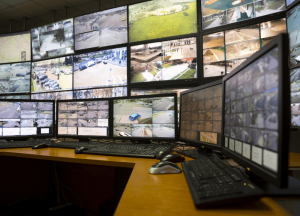
Centralized control. Faster decisions. Better outcomes
A control room management platform is a unified software and hardware environment that brings together video wall management, operator workstations, source routing, workflow automation, and system health monitoring under a single interface. Rather than managing separate tools for each function, operators and administrators work from one consistent system reducing complexity and improving response times in environments where every second counts. Aetria, Datapath’s control room platform, is purpose-built for exactly this: delivering integrated operations at any scale, from a single-room deployment to a multi-site enterprise network.
At a glance
- A control room management platform unifies video walls, workstations, sources, and workflows into one interface.
- Aetria combines control room software, video wall management, operator workstation technology, automation, and hardware appliances.
See Aetria in action
Explore how Aetria unifies control room operations across any scale of deployment.
What technologies make up a complete control room solution?
Modern control rooms rely on a combination of software platforms, hardware appliances, and network infrastructure working in coordination. A well-integrated solution typically includes video wall management software, operator workstation software, source and content management, control room automation, system health monitoring, user access control, and dedicated appliances for deployment and network management.
The challenge has historically been that each of these components came from different vendors, requiring custom integration work and creating fragile dependencies between systems. Unified platforms like Aetria address this directly by combining all of these elements in a single, supported product, reducing integration risk and simplifying long-term administration.
How Aetria brings these together
Aetria is built around a core set of integrated components: control room management software, video wall management, operator workstation technology, workflow automation tools, system monitoring, source management, deployment appliances, and touchscreen control interfaces. These are not bolted-together third-party tools, they are engineered as a cohesive system, which means features like permissions, source routing, and alert management work consistently across every element of the platform.
Which environments benefit most from a unified management platform?
Any operation where multiple people need to monitor, interpret, and respond to real-time information across multiple display surfaces and data sources is a candidate for a unified platform. The clearest use cases include:
Security operations centers (SOCs)
Surveillance feeds, alarm management, and incident escalation
Network operations centers (NOCs)
Infrastructure monitoring, uptime dashboards, and fault response
Transportation control
Traffic management, rail operations, and passenger information systems
Utilities and energy
Grid monitoring, pipeline management, and environmental data
Emergency response and dispatch
Defense and government
Secure, mission-critical operations requiring strict access control
Broadcast and media
Production monitoring, graphics playout, and editorial oversight
Corporate operations centers
The common thread is real-time decision-making at scale. When an operator needs to act on information quickly and when a wrong decision or missed alert carries real cost a fragmented set of tools becomes a liability.
Planning a control room project?
Talk to a Datapath specialist about designing the right solution for your environment.
Core capabilities of the Aetria platform
Video Wall Management
Centralized layout control and source routing
Manage display layouts, source assignments, and content positioning across single or multi-wall environments from one interface, with full bezel compensation and resolution mapping.
Operator Workstations
Unified access to applications and data sources
Operators access all relevant applications, video feeds, dashboards, and remote systems from a single, organized workspace reducing context-switching and improving focus.
Workflow Automation
Event-triggered actions without manual intervention
Define conditions and actions that execute automatically with layout changes, alert escalations, content routing, to accelerate incident response and enforce standard procedures.
System Health Monitoring
Real-time visibility across every connected component
Continuously monitors devices, services, and network infrastructure. Proactive alerts surface issues before they impact operations, improving reliability and reducing downtime.
Access Control
Granular user permissions and role management
Assign permissions at the user or role level across sources, layouts, and functions. Supports multi-operator environments where different teams require different levels of access.
Scalability
Granular user permissions and role management
Aetria supports operator-level permissions, restricting which sources each operator can view or control. This is particularly important in multi-tenant SOCs or deployments covering sensitive government or critical infrastructure sites.
Third-Party Integration
Connect external platforms into the operational hub
Aetria supports operator-level permissions, restricting which sources each operator can view or control. This is particularly important in multi-tenant SOCs or deployments covering sensitive government or critical infrastructure sites.
Deployment Appliances
Simplified installation and centralized administration
Frequently asked questions
What is a control room management platform?
A control room management platform brings together the systems, tools, and workflows required to operate a modern control room. It provides a centralized environment for managing video walls, operator workstations, source content, user permissions, system health monitoring, and operational workflows through a single interface.
What technologies are typically included in a modern control room solution?
A complete control room solution typically combines several technologies, including video wall management software, operator workstation software, control room automation, source management, system monitoring, user access control, and hardware appliances for deployment and infrastructure management.
What are the key components of the Aetria control room solution?
Aetria combines multiple technologies into a single platform, including:
- Control room management software
- Video wall management software
- Operator workstation technology
- System monitoring and health management
- Workflow automation tools
- Source and content management
- Deployment and network management appliances
- Touchscreen control interfaces
What types of control rooms benefit from a unified management platform?
Unified control room platforms are used in environments where real-time decision-making and operational visibility are critical, including:
How does a control room platform support future growth?
Scalable control room platforms allow organizations to add users, workstations, video walls, displays, and locations over time. This enables the solution to grow alongside operational requirements without requiring a complete system redesign.
What are the main benefits of using an integrated control room solution?
An integrated platform reduces operational complexity by bringing multiple technologies together under one system. Benefits typically include improved operator efficiency, simplified management, enhanced situational awareness, better system reliability, and reduced training requirements.
Ready to build a better control room?
Speak with a Datapath specialist about how Aetria can unify your control room operations or download our whitepaper to explore the full platform in detail.