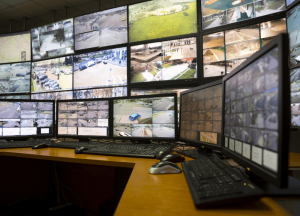
How much is latency costing you?
If you oversee operations in a control room, you already know, milliseconds matter. A delay, a flicker, a lag in visualization… it doesn’t just slow down data. It slows down decisions. And in environments where safety, uptime, and reputation are on the line, even a few seconds can change everything.
Across industries from utilities and energy to transportation and manufacturing, managers are under pressure to do more with less. More visibility. More accountability. More uptime. But often, with infrastructure that’s already past its prime.
Latency: The Silent Saboteur
Latency isn’t always visible, but its impact is felt everywhere.
A three-second delay in an operator’s video feed may sound trivial, until it delays a response to a system anomaly, or an alarm signal reaches the wrong team at the wrong time.
According to CISA, nearly 60% of industrial incidents involve some form of delayed detection or response to early warning signals. In today’s interconnected operations, that delay can escalate rapidly: missed alerts lead to downtime; downtime leads to lost output; and lost output that can lead to reputational damage.
When real-time operations aren’t truly “real time,” those responsible find themselves reacting instead of anticipating. That’s not just a technology problem, it’s a strategic risk.
The Legacy Infrastructure Dilemma
The average lifespan of a control room infrastructure in the U.S. is 10–15 years; which means many are still running systems designed before digital integration became the norm.
These systems were never built for modern workloads. They weren’t designed to handle multi-site data streams, hybrid network architectures, or cloud-driven analytics. As a result, operators spend valuable time troubleshooting and adapting, while decision-makers struggle to justify modernization amid budget pressures.
It’s a difficult trade-off: modernize and risk disruption, or delay and risk failure. Both options are costly; but inaction is the one that carries the hidden price tag of vulnerability.
Rising Cyber and Compliance Pressures
Control rooms sit at the heart of critical infrastructure, and that makes them a growing target. From energy networks to state transportation systems, operational environments are now part of the frontline in cyber defense.
Managers face an expanding list of compliance mandates, all while balancing uptime and safety. The challenge isn’t just implementing cybersecurity; it’s doing so without compromising performance. Latency can even mask cyber threats, as subtle system slowdowns often go unnoticed until damage is done.
For many strategy leaders and mangers, the anxiety isn’t about “if” but “when.” And in that environment, having visibility, redundancy, and confidence in your infrastructure is essential.