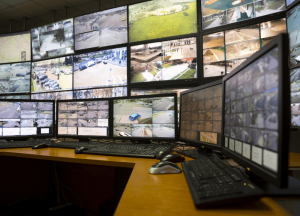
Control room environments are changing fast. In South America, digital infrastructure investments are growing rapidly: the regional control room solutions market is expected to grow from about US$2.4 billion in 2021 to US$3.065 billion by the end of 2025. At the same time, network-infrastructure markets anticipate nearly US$8.52 billion in revenue in South America in 2025 as more data, sensors and video feeds come online.
Working within control rooms, it means handling more sources, more alerts, more video, and more decisions; and doing so under conditions where seconds matter.
When your team is watching dozens of camera feeds, telemetry from remote assets, alarms from sensors, and overlayed dashboards, every millisecond delay becomes a heavier burden. For example: if a pipeline leak sensor triggers, but the feed arrives even 5 seconds late at the operator station; that’s 5 seconds the site is un-monitored, 5 seconds where decisions can’t be taken, 5 seconds lost. Multiply that by the frequency of alerts, the volume of data, and the stakes; and “just a few seconds” isn’t minor. It’s the difference between a handled event and a crisis, between maintained uptime and unplanned production loss, between regulatory compliance and reputational damage.
So how do you get those seconds back? How do you equip your operators so they spend less time waiting and more time acting? That’s where our experience in control rooms comes in:
By delivering real-time synchronised video and data feeds, operators see the same frame, the same alert, the same condition, at the same moment; no lag, no mismatch.
By embedding instant failover and built-in redundancy, your control room stays visible even when a link or controller fails; meaning those seconds of lip-service downtime disappear.
By providing an “all sources to all screens” interface, your operators don’t waste time hunting for the right feed or toggling systems; they have what they need instantly, and can focus on decision-making rather than managing the tools.
Technology that reduces latency isn’t just nice to have; it becomes your most powerful operational asset. Because if you’re managing and responsible for a control room operator, that’s can makes all the difference.